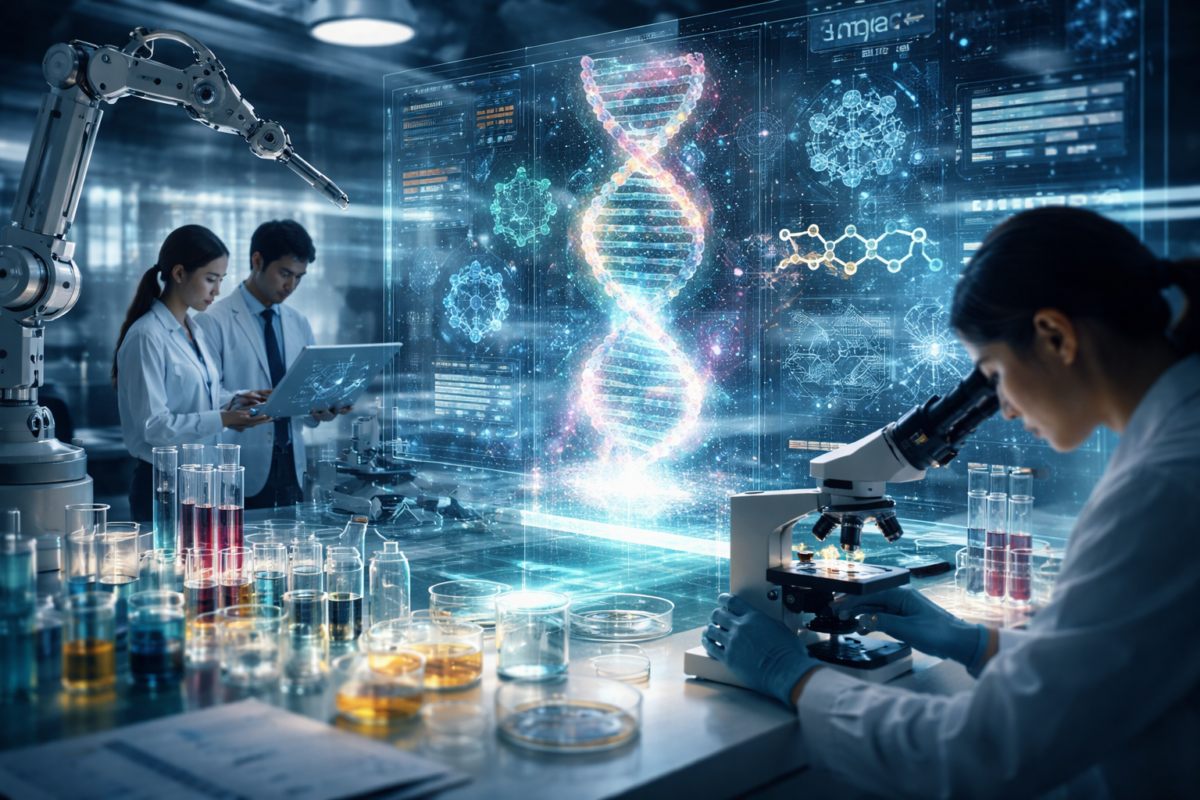
The intersection of generative AI and biotechnology is moving past the “hype” phase and into a high-stakes period of experimental deployment. While the broader tech industry grapples with the technical debt and integration hurdles of the LLM era, specialized biotech firms are proving that AI’s most profound impact may not be in writing code, but in rewriting the building blocks of biology.
The Promise: Programming the Proteome
The most significant shift in the sector is the move from discovery by chance to discovery by design. Seattle-based startup Accipiter Bio recently emerged with $12.7 million in funding and established partnerships with major pharmaceutical players, signaling a new era of AI-designed proteins. Rather than screening thousands of existing molecules to find a “hit,” Accipiter utilizes generative models to architect entirely new proteins tailored for specific therapeutic functions.
This methodology mirrors the “AlphaFold” revolution but takes it a step further into functional application. By treating protein sequences like a language, biotech firms can now predict how a specific molecular structure will bind to a disease target with unprecedented accuracy. This “generative biology” approach promises to slash the traditional drug discovery timeline—which typically takes over a decade and billions of dollars—by identifying viable candidates in a fraction of the time.
Strategic Partnerships: AI as a Lab Assistant
The scale of data required for these breakthroughs has necessitated a new breed of collaboration. For example, OpenAI’s partnership with Ginkgo Bioworks illustrates how frontier AI models are being trained on massive, proprietary biological datasets. These “biological large language models” (bLLMs) are designed to assist researchers in everything from DNA synthesis to optimizing microbial strains for industrial manufacturing.
According to reports in Scientific American, these tools act as sophisticated reasoning engines for scientists, helping them navigate the astronomical complexity of biological systems. By offloading the “brute force” aspects of research to AI, laboratories can focus on high-level hypothesis testing, effectively turning the lab into a software-like development environment.
The “Hangover”: Integration and Quality Challenges
However, the transition is not without friction. As noted in InfoWorld, many industries are currently experiencing an “AI coding hangover,” characterized by the realization that generating output is easier than maintaining it. In biotech, this translates to a critical challenge: “hallucinations” in biological design can be far more costly than a bug in a software application.
Biotech firms are finding that while AI can suggest a theoretical protein, the physical validation in a “wet lab” remains a bottleneck. There is also the growing concern of “technical debt” in AI-generated research. If the underlying models are “black boxes,” understanding why a specific drug candidate failed becomes nearly impossible, potentially complicating the FDA approval process which demands rigorous transparency and reproducibility.
The Road Ahead
The future of biotech lies in bridging the gap between digital prediction and biological reality. Firms that survive the initial excitement will be those that treat AI not as a magic wand, but as a core component of a modernized R&D stack. The promise is a world of “programmable medicine,” where treatments are designed with the precision of software. The challenge, however, remains the same as it has always been in medicine: ensuring that what works in the silicon of a GPU actually works in the cells of a human being.